
Rock Island County Arrest History
The Rock Island County Sheriff's Office makes arrests in its own jurisdiction and operates central booking at the Correctional Center. Moline, Rock Island, and East Moline police keep reports created by their officers. Illinois State Police, campus police, and other authorized agencies may also be the source custodian. Once an arrestee reaches central booking, the county creates intake, custody, digital fingerprint, and computerized booking-image records.
An arrest history can connect more than one event over time. The current roster is narrower. It reflects a live or recent custody snapshot, not a complete county archive. The alleged charge entered at intake can change when the State's Attorney reviews the facts. If a case is filed, the Circuit Clerk's CF, CM, or other docket becomes the better source for the adjudicated charge and result.
Rock Island County Central Booking
The Rock Island County Correctional Center at 1317 Third Avenue is the central booking point. The sheriff reports that more than 10,000 people pass through each year. The jail and annex have a combined capacity of 325, with a published average daily population of 260 and an average stay of seven days. The jail also holds people for federal agencies and nearby communities, so custody in Rock Island County does not always mean a county charge.
The county's inmate-services page documents jail operations and the contact route.
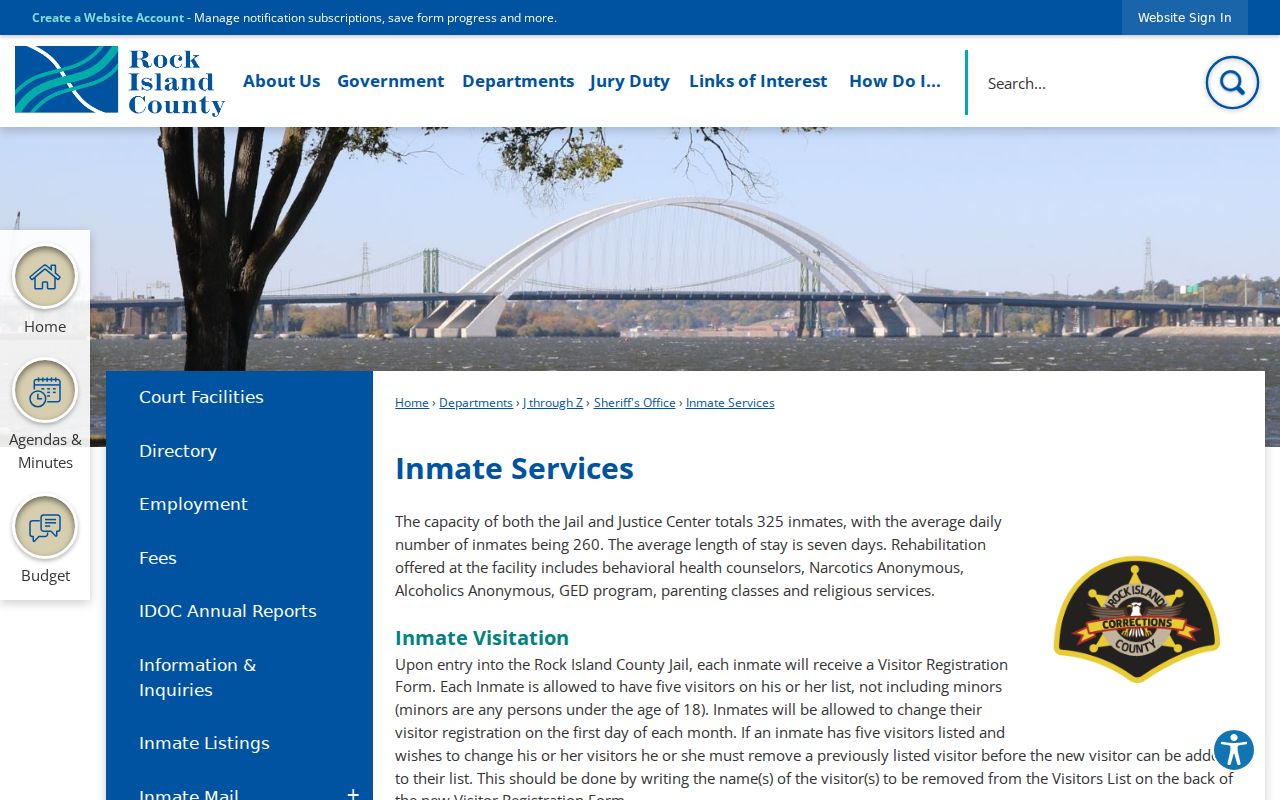
Short stays help explain why a person can leave the public roster soon after a booking, release, or transfer.
Looking Up Rock Island County Arrests
Start with the channel that answers the immediate question, then move outward. This sequence covers every Rock Island County arrest access route documented in the research.
- Search the official Zuercher jail listing for current published county custody.
- If no entry appears, call the jail at 309-558-3455 because release, transfer, or timing can change the roster.
- Request the incident or arrest report from the agency that made the arrest; use the sheriff only for deputy-created or central-booking records.
- Search Judici after filing, then compare intake charges with the prosecutor-filed counts and final court result.
- For one's own statewide fingerprint record, use ISP Access and Review; request a historical booking from the sheriff when it is no longer online.
The official Zuercher portal provides the neutral current-custody search.
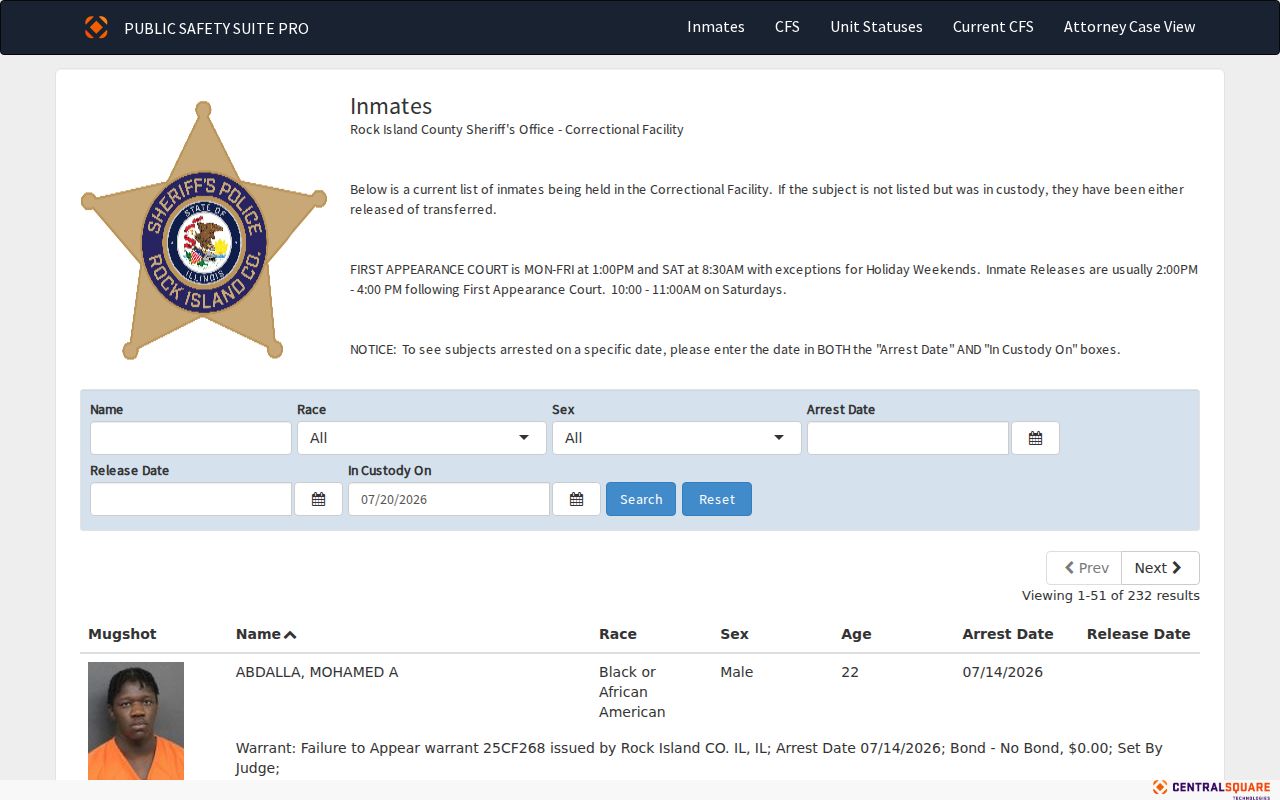
Record the booking identifier or case reference. Do not infer guilt from a photograph or listing.
Rock Island County Arrest Reports
The arresting officer creates the incident, arrest, and probable-cause material. A sheriff request is correct for deputy records, but it is not a substitute for a report written by a city department. For a sheriff inquiry, include the incident or booking number if known, event date and time, location, agency, record type, and preferred format. State whether inspection, electronic copy, paper copy, or certification is needed.
The Sheriff's Information Inquiries form accepts identifiable nonemergency questions. It collects requester identity and contact fields, a subject, comments or a question, and human verification.
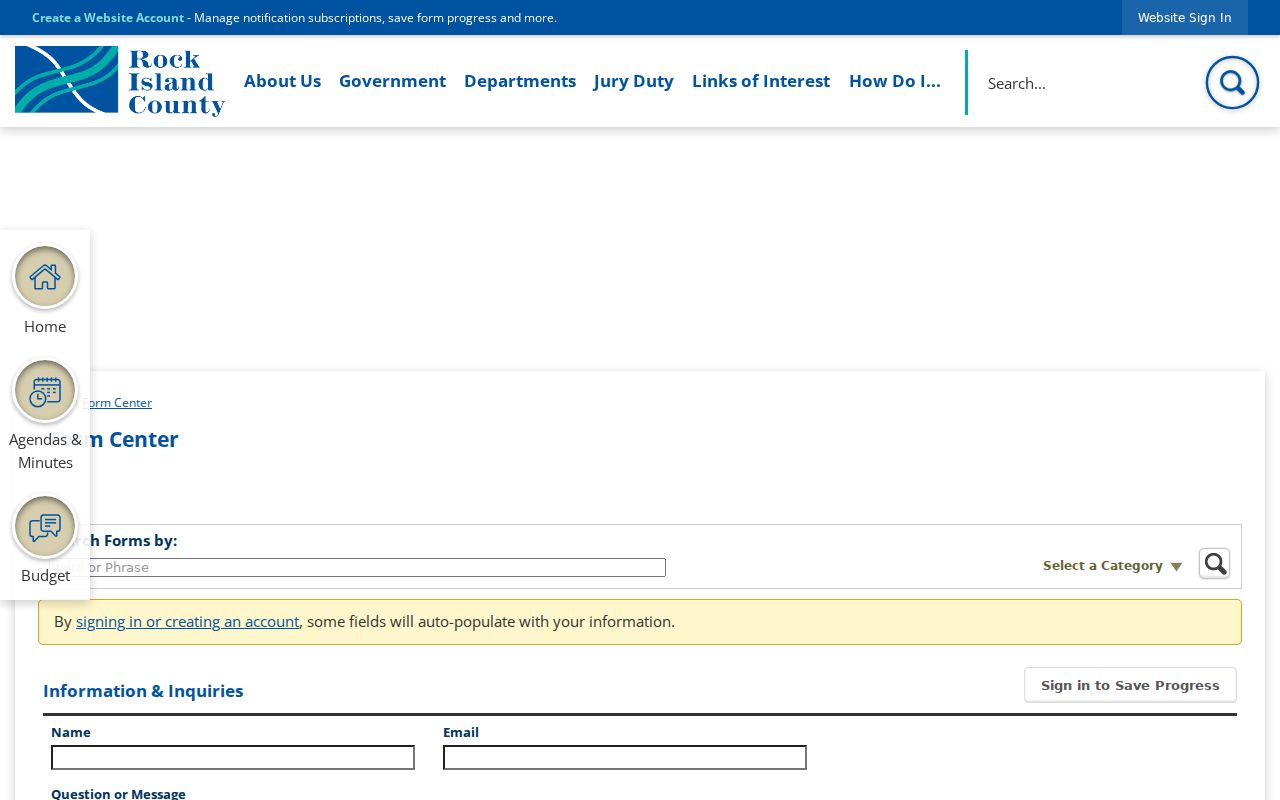
For direct help, use 309-558-3414 for FOIA and ongoing-investigation questions or the 24-hour main line at 309-794-1230.
Illinois FOIA allows an agency to redact material when release would interfere with an active case, identify a confidential source, disclose protected techniques, endanger a person, or expose medical and victim-sensitive details. The office should release reasonably separable, nonexempt parts and identify the basis for a denial. A requester may seek review through the Illinois Attorney General's Public Access Counselor or circuit court. The Circuit Clerk is different: court-copy requests go to the clerk rather than a county FOIA officer.
Inside a Rock Island County Arrest Record
A Rock Island County booking entry records custody and allegations at a point in time. Some fields may be withheld due to juvenile status, medical or safety concerns, an active investigation, victim protections, or a court order.
| Booking Number | County custody identifier used to distinguish the intake event. |
|---|---|
| Booking Date & Time | When central booking processed the person, which may follow the arrest time. |
| Arresting Agency | Identifies the office that owns the source incident and arrest report. |
| Charges | Allegations asserted at intake; later filed counts can differ. |
| Fingerprint Cycle | Digital fingerprints and transaction data sent toward the ISP arrest cycle. |
| Booking Image | Created during intake but not proof of guilt; release can be restricted. |
| Custody Status | Current location, release, or transfer information where published. |
Property, medical, classification, and safety details are not ordinary public fields. The neutral record keys are more reliable than assumptions drawn from an image.
Rock Island County Fingerprint Cycle
Central booking uses inkless digital fingerprints. Reportable arrest-event data flows to the Illinois State Police Bureau of Identification and begins or updates a statewide arrest cycle. Prosecutors then decide whether to file charges. The clerk's later disposition should return to ISP and link to that biometric cycle. Data-entry lag, rejected prints, unmatched names, or delayed disposition reporting can make the systems disagree for a time.
A person reviewing their own record should compare ISP Access and Review with the clerk's case file and the source agency report. ISP's Record Challenge process is the route when a repository entry is incomplete or wrong. The public CHIRP product is conviction information, not a full arrest-and-disposition history.
That distinction matters when the state cycle lacks a disposition. Use the arrest date and court case number to obtain the local order, then follow the ISP challenge instructions. Fingerprints reduce the risk of a false name match, but they do not guarantee that every paper record or non-fingerprint event reached the repository. Sealed, expunged, and juvenile material also follows separate access rules.
Booking Logs and Recent Arrests
The Zuercher listing functions as Rock Island County's official current inmate interface. Its name field can filter the published listing, and result rows may open structural details such as booking time, charge descriptions, bond or custody status, and identifiers where populated. It is not a historical arrest gallery. An entry may vanish after release or transfer, and absence proves nothing about whether an earlier arrest occurred.
If the web roster is unavailable, call the jail. If the arrest is old, ask the sheriff for the historical booking and the arresting agency for its report. For filed charges, use the Rock Island County criminal court case record. That three-office trail is more sound than treating the live roster as a permanent history.
Ask each office for the piece it actually created. The jail can address the booking and custody entry. Moline, Rock Island, or East Moline police can address an incident handled by that city. The Circuit Clerk can provide the filed charge, hearing history, judgment, and sentence. When a name search yields no result, verify the agency, date, spelling, and case-year format before concluding that no Rock Island County arrest record exists.
Note: Rock Island County publishes an official custody interface, not a permanent mugshot gallery or proof of criminal guilt.
Rock Island County Report Fees
Published sheriff fees distinguish reports from bookings. Accident reports cost $5 regardless of page count. Crime-report copies are free for pages one through fifty and cost $0.15 for each page after fifty. Illinois FOIA generally gives a public body five business days for a noncommercial request and allows a written five-business-day extension for statutory reasons.
| Record | Published Cost |
|---|---|
| Accident report | $5 per report |
| Crime report, pages 1-50 | Free |
| Crime report, pages over 50 | $0.15 per page |
The county's official sheriff fee page is the source for those amounts.
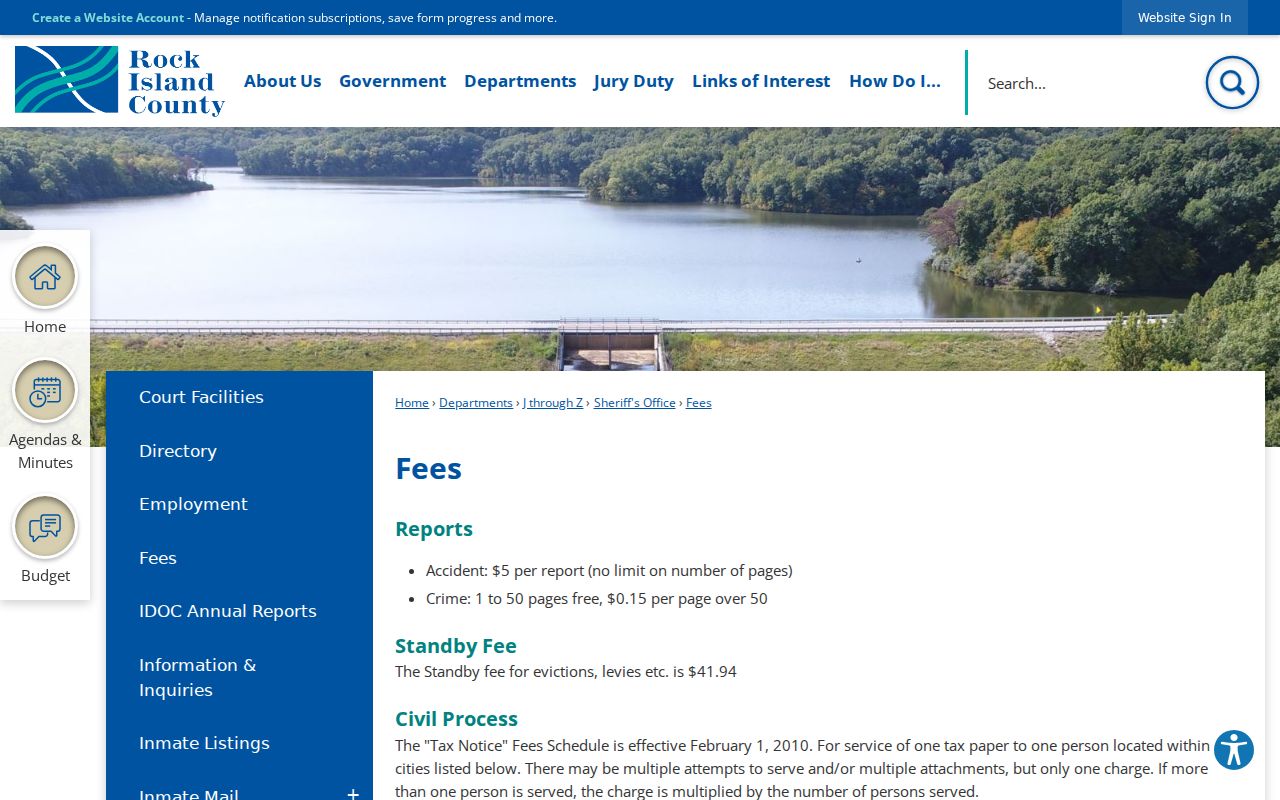
Actual media, certification, or other reproduction costs may differ, so confirm the current amount before ordering.
Rock Island County Custody Layers
Current county custody, historical booking, state prison, and federal designation require different searches. Use Zuercher for the county jail. After transfer to state prison, use the IDOC Individuals in Custody Search. IDOC's official screen illustrates the state layer.
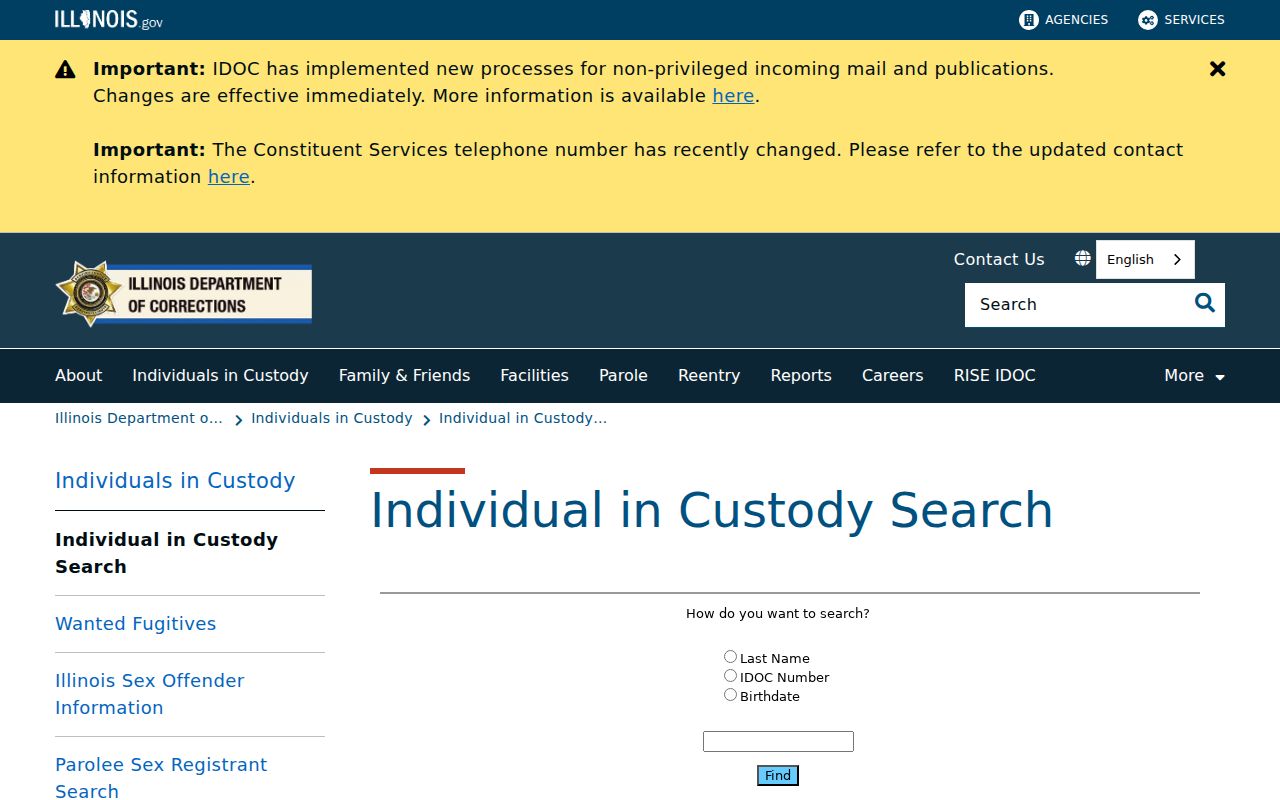
A federal hold at the county jail may still appear only in the county channel before designation. Once designated to federal custody, the Federal Bureau of Prisons locator becomes the right source.
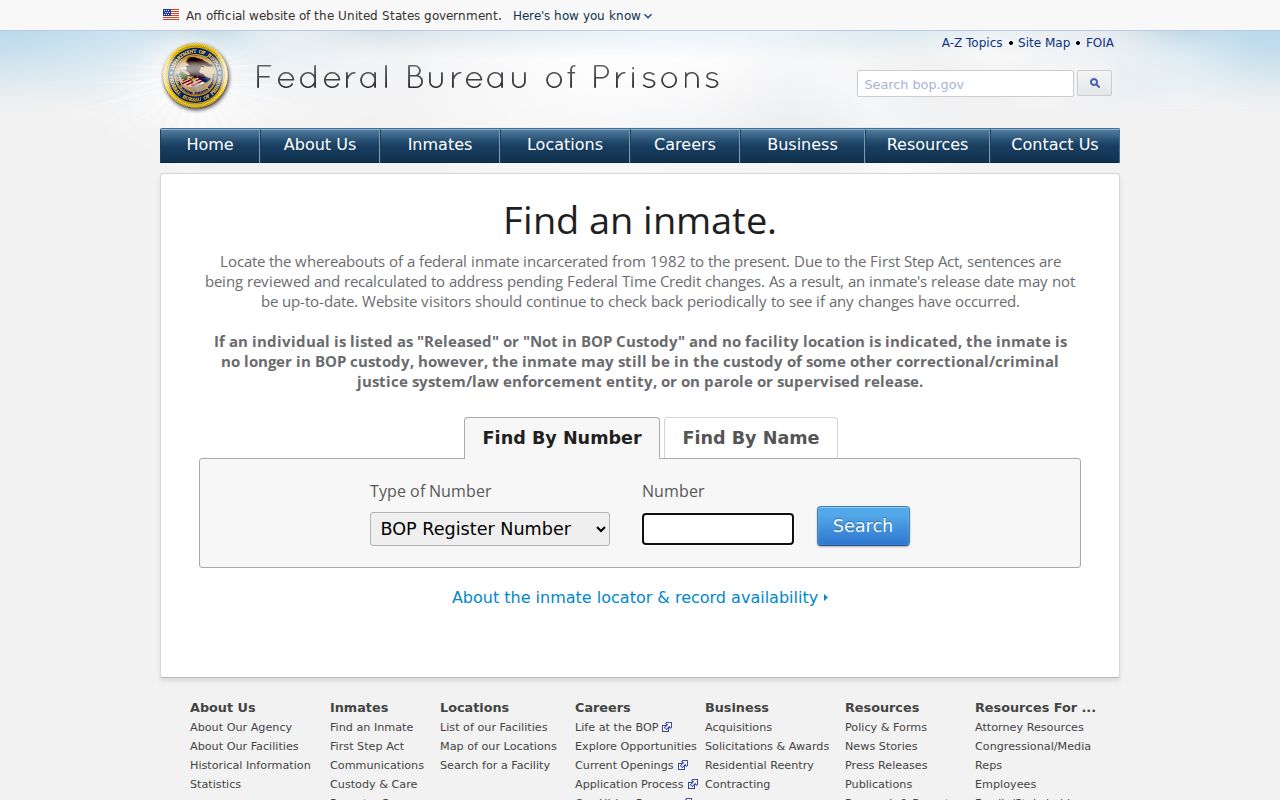
Neither prison locator supplies the arresting agency's narrative or the Rock Island County court disposition.
The county jail also holds some people for federal agencies and nearby communities. That local entry may remain the best current lead until a transfer occurs. Check the booking agency and custody status before moving to a state or federal locator.
Arrests Are Not Convictions
An arrest documents custody and accusation. A conviction follows a plea or finding of guilt in court. Dismissal, acquittal, or a decision not to file can leave an arrest event without a conviction, and clearing an eligible record requires the legal expungement or sealing process under 20 ILCS 2630/5.2.
| Point | Arrest Record | Conviction Record |
|---|---|---|
| Created by | Arresting agency and county booking | Circuit court, with disposition reported to ISP |
| Shows | Custody and alleged charges | A judgment of guilt and sentence |
| Found through | Roster, jail, or source agency | Judici, clerk, or UCIA conviction response |
| Can end with | Release, no filing, dismissal, or filed case | Sentence, appeal, sealing, or other court action |
Note: A Rock Island County arrest is not proof of guilt, and booking charges may change before final disposition.