
Checking Criminal History in Rock Island
Begin at city level when a Rock Island police officer created the report. Move to the county only for booking or filed-court material, then use the state channel for Illinois conviction information or review of one's own fingerprint record. This order avoids asking one office to produce another office's file.
- Contact the Rock Island Police Records Clerk for a city incident, arrest report, subpoena, or records check.
- Submit a focused police FOIA request by the online form, email, mail, fax, or personal delivery.
- Use the county Zuercher roster for current booking or Judici for a filed CF, CM, OV, CC, or traffic case.
- Ask the Rock Island County Circuit Clerk for a standard or certified court document that is not online.
- Use Illinois State Police CHIRP for public conviction information or Access and Review for one's own fuller repository file.
A no-result response does not settle the question. Check the agency, spelling, year, and whether the matter was an unfiled arrest, city civil ticket, county case, or federal event.
Three Rock Island Records Counters
Rock Island is both a city and the county seat. That makes three nearby custodians easy to confuse. The Rock Island Police Department at 1212 5th Avenue owns reports created by city officers. The Rock Island County Sheriff at 1317 Third Avenue owns county central-booking records and reports made by deputies. The Circuit Clerk at the justice complex owns filed court cases, judgments, and certified court copies. The State's Attorney also works in the city but does not replace the clerk's public case counter.
The practical test is simple. Ask who created the item. A patrol narrative stays with the police department. An intake entry follows county booking. A plea or sentence belongs to the circuit file. Physical closeness does not merge those Rock Island criminal records, and one broad request sent to the wrong office can return no responsive material.
Rock Island Police Department Records
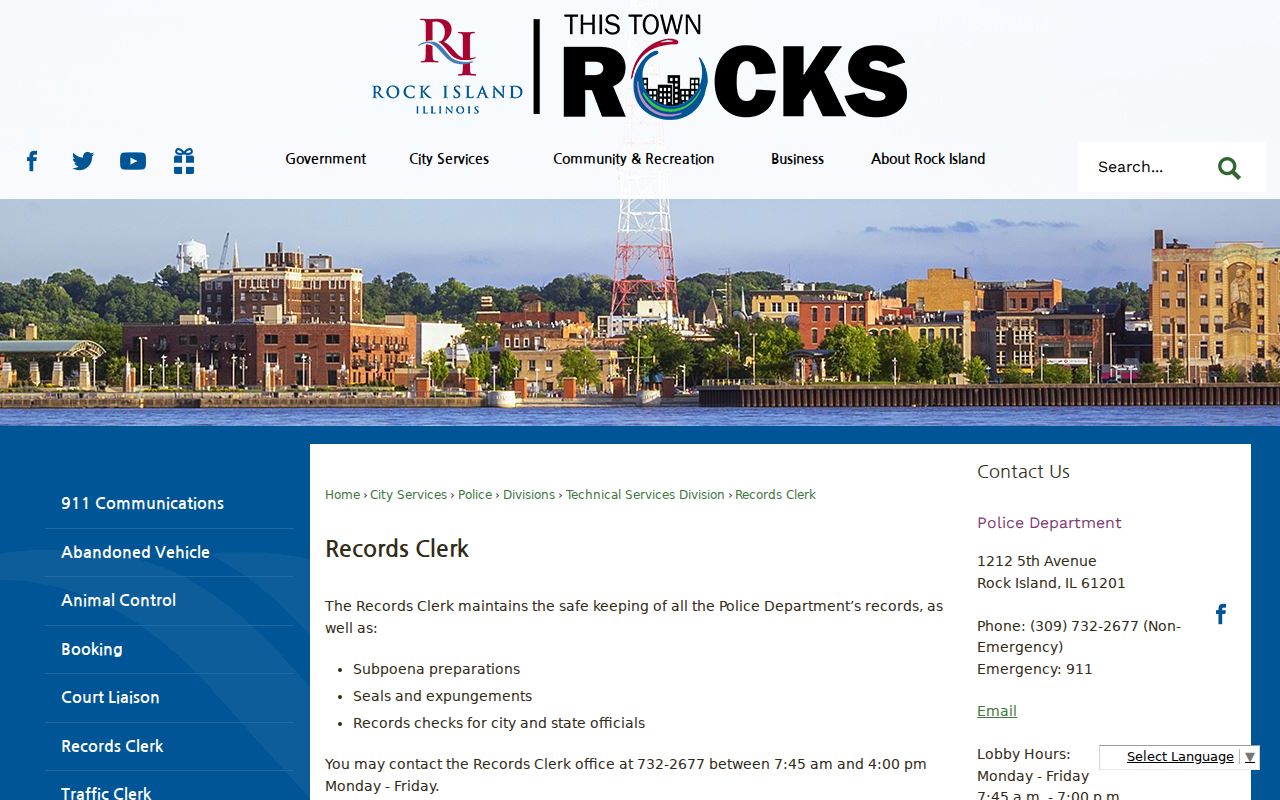
The Rock Island Police Records Clerk maintains police reports, subpoenas, sealing and expungement processing, and records checks. Law-enforcement record requests go to 1212 5th Avenue, Rock Island, IL 61201. The department phone is 309-732-2677 and its published email is policemail@rigov.org. Lobby hours are Monday through Friday from 7:45 a.m. to 7:00 p.m.; the Records Clerk works from 7:45 a.m. to 4:00 p.m.
The official clerk page shows the local request desk and its role.
The city code permits requests by mail, personal delivery, email, or fax, and says a city form is available but is not mandatory. A clear request should identify an incident number, date and time, location, record type, and whether inspection or a copy is sought.
Rock Island Police FOIA Fields
The online police FOIA form supplies a structured city channel. It asks for requester identity and mailing details, a phone number, a delivery choice, and a description capped at 500 characters. Company, fax, email, report number, and names or dates of birth are optional fields. A short but exact description is more useful than a broad demand for all criminal records in Rock Island.
| Form Field | Use in the Request | Status |
|---|---|---|
| Name and mailing address | Identifies the requester and response address | Required fields |
| Phone and delivery choice | Supports contact and sets the response route | Required fields |
| Description | State incident, date, place, record, and desired format | Required; 500-character limit |
| Report number and names/DOBs | Narrows the city police search | Optional |
| Email, company, and fax | Additional contact or delivery details | Optional |
First fifty black-and-white pages are free, then pages cost $0.15 each. A CD or DVD is $1, a flash drive is $5, and a crash report is $5.
Rock Island Arrests and Bookings
Rock Island police create the source arrest and incident material, but city arrestees enter county central booking at 1317 Third Avenue. The Correctional Center creates the intake record, digital fingerprint transaction, computerized booking image, and custody identifiers. A city report therefore answers what the officer documented, while the county entry answers what happened at booking.
The official Zuercher roster concerns current published county custody. Release, transfer, spelling, and refresh timing can change its result. If a Rock Island booking no longer appears, call the county jail or request the historical booking instead of treating the absence as proof that no arrest occurred. When prosecutors file a charge, the court case supplies the formal counts and final disposition. County-wide booking detail is available through the Rock Island County arrest lookup.
Rock Island Police or Sheriff?
A city address does not determine the custodian. First identify the agency shown on the incident number, citation, booking entry, or court docket. Use Rock Island police for events handled by city officers. Use the sheriff for deputy reports or county booking. Multi-agency work may require separate requests because each office retains the records it created.
The official Rock Island Police page confirms the city department and contact point.

The city is also next to the federally administered Rock Island Arsenal. An incident described casually as Rock Island may be federal rather than city-owned. Confirm the exact site and responding agency before filing.
Note: A county booking does not transfer ownership of a city police incident report to the sheriff.
Municipal Court Records in Rock Island
Illinois has no separate constitutional municipal criminal court for Rock Island. City ordinance, traffic, misdemeanor, and felony cases are filed in the Rock Island County Circuit Court. Judici and the Circuit Clerk are the case-search routes. Rock Island also participates in MUNICES, an administrative Municipal Code Enforcement System for civil building, zoning, parking, and qualifying ordinance tickets. A hearing officer can impose a fine, but MUNICES is not a criminal court database.
| Court Name | Circuit Court of the Fourteenth Judicial Circuit for criminal, traffic, and filed ordinance cases. |
|---|---|
| Case Types Heard | Felony CF, misdemeanor CM, ordinance OV, contempt CC, traffic, DUI, and conservation matters. |
| Case Lookup Channel | Free Rock Island County Judici index, daily docket, or Circuit Clerk public terminal. |
| What the Docket Shows | Case number, type, status, history, hearings, filed counts, disposition, and financial fields where public. |
| Copies & Fees | Standard or raised-seal certified copies from the Circuit Clerk; copy, certification, and mailing fees apply. |
The court file belongs to the county system even when a Rock Island officer began the case.
Rock Island MUNICES Is Civil
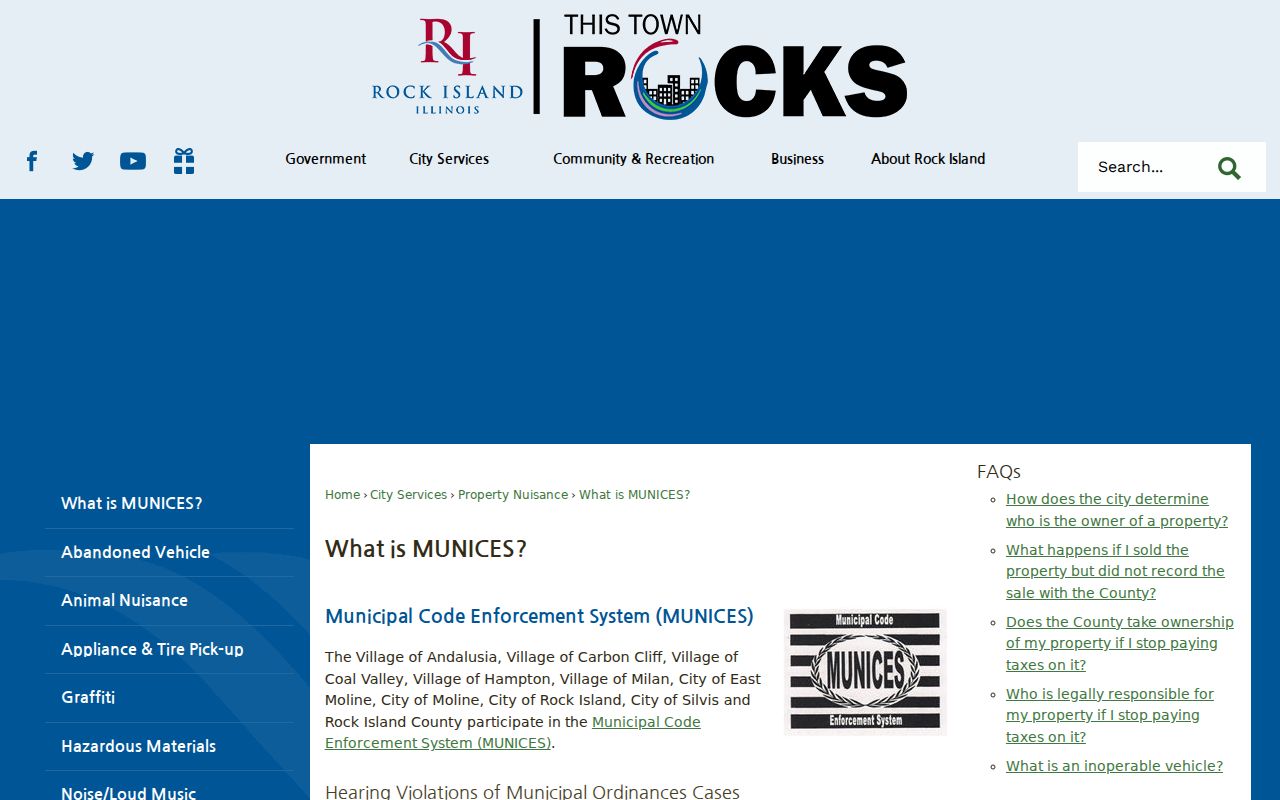
The city's MUNICES explanation draws an important boundary. MUNICES handles administrative code enforcement shared by area cities. Its civil hearings are not criminal prosecutions, and a MUNICES fine is not a Circuit Court criminal conviction. Searching only Judici can therefore miss an administrative ordinance matter, while searching MUNICES does not replace a criminal case check.
The official system page shows how Rock Island labels this administrative channel.
Read the notice or ticket carefully. The named tribunal determines whether the next stop is MUNICES, the Circuit Clerk, or a city records request.
Where Rock Island Records Go
A Rock Island police event can create several linked files. The officer writes the incident or arrest report. County central booking captures intake and fingerprints. The State's Attorney decides what to charge. The Circuit Clerk opens the case and records hearings, pleas, dismissal or conviction, sentence, and later enforcement. A reportable disposition should return to the Illinois State Police Bureau of Identification and link with the fingerprint arrest cycle.
Record flow: Rock Island Police Department › Rock Island County Courts › Illinois State Police Bureau of Identification
Use the city report for the incident narrative, the roster for current custody, Judici for filed activity, and ISP for the statewide repository layer. A mismatch may reflect lag, a rejected fingerprint, a name issue, or a delayed disposition rather than misconduct by any one office.
Rock Island Prosecution Records
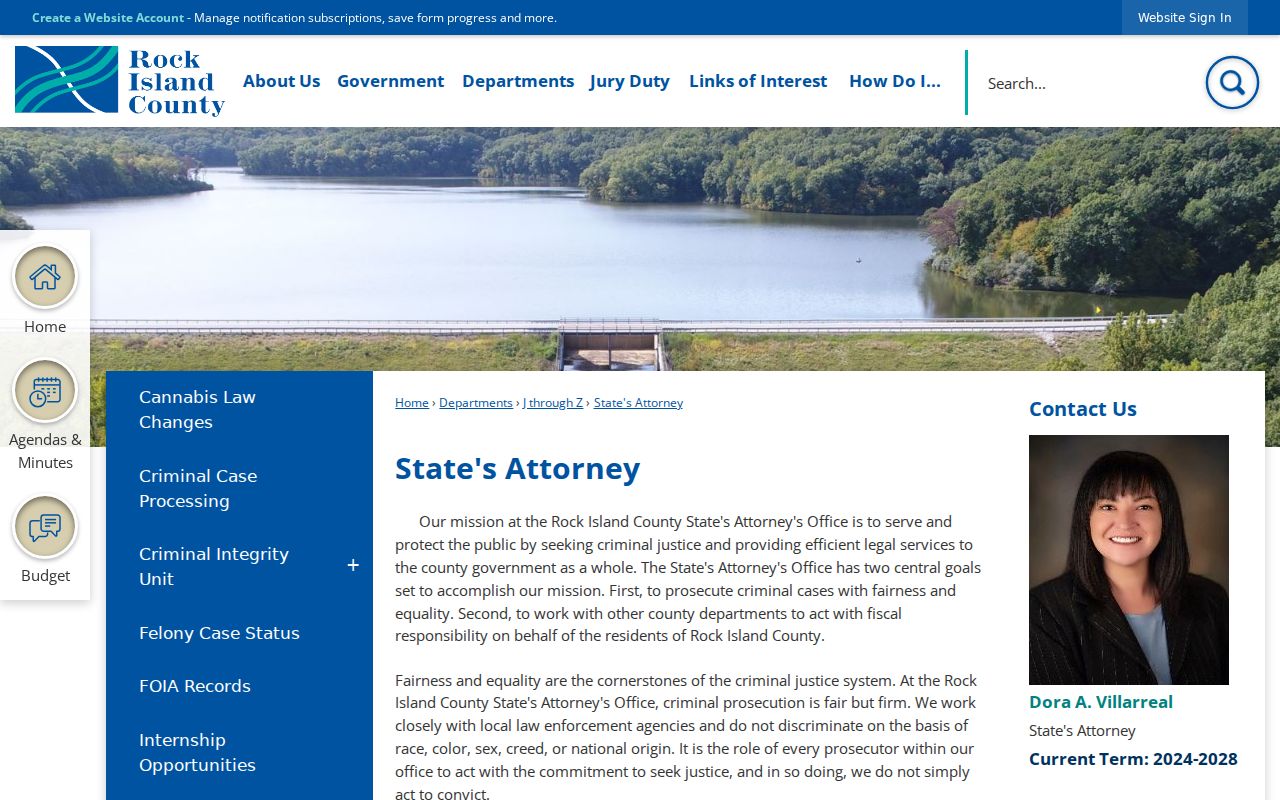
The county seat places the State's Attorney and Public Defender close to city and court offices, but their roles differ from a records counter. The State's Attorney screens police referrals and files charges. Its victim-witness resources may help eligible participants understand notifications. The Public Defender represents people appointed by the court; it does not certify judgments or serve as the public custodian of Rock Island criminal records.
The official State's Attorney page shows the prosecutor's county role.
For the filed judgment, use the clerk. For the city report, return to police. The office that litigates a case is not automatically the office that releases each underlying record.
Rock Island Defender Record Limits
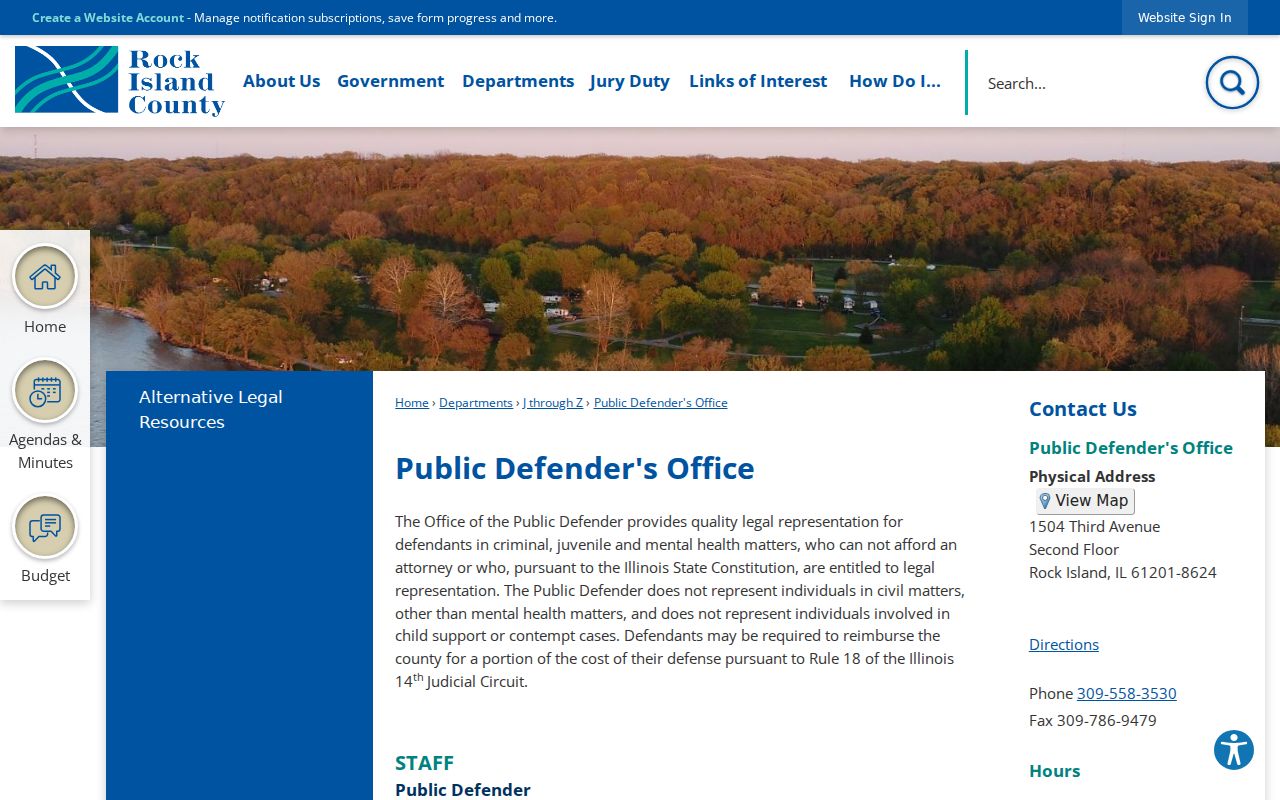
The Public Defender's files concern representation and may include protected attorney-client material. They are not a second public copy of the police report or court docket. A person seeking an official disposition should ask the Circuit Clerk, while a client should communicate with assigned counsel about their own defense file and legal questions.
The county's Public Defender page defines that office's scope.
This boundary keeps the city page at the right altitude: police release city reports, the county clerk releases court records, and defense counsel provides representation rather than a public search service.
Public Access Rules in Rock Island
Illinois FOIA governs records held by the Rock Island Police Department. A noncommercial request ordinarily receives a response within five business days, with a written five-business-day extension available for statutory reasons. Police may redact material that would interfere with a case, deprive a fair trial, identify a confidential source, endanger safety, reveal protected techniques, or expose juvenile, victim, medical, and identity information. Releasable portions should be separated where practical.
Key Statutes:
Illinois Freedom of Information Act, 5 ILCS 140 sets city-agency response duties, fees, and exemptions.
Criminal Identification Act, 20 ILCS 2630 governs collection, correction, expungement, sealing, and dissemination of identification records.
Uniform Conviction Information Act, 20 ILCS 2635 makes defined ISP conviction information available through its separate system.
Court files follow court rules, statutes, and orders rather than a police FOIA request. Juvenile, sealed, expunged, impounded, and protected victim information will not appear like an ordinary public record.
Rock Island police must release reasonably separable public portions when an exemption affects only part of a city record. A denial should identify the legal basis. Court copies still require a separate request to the Circuit Clerk, even when the city report and the court case concern the same event.